August 2026 Edition
E-CACS August 2026 Newsletter
A recap of the August 9 Annual Summer BBQ Picnic at Duke Island Park with more than 200 attendees, a member reflection by Bo Zhang, PhD (IFF) on three lessons learned from his Ph.D. advisor Dr. Robert Powers, academic news on the PD-1×VEGF bispecific ivonescimab in triple-negative breast cancer and ligand-free nanoparticles for in vivo CAR-T engineering, a cosmetics roundup on AI as a beauty adviser, Outer Bio’s four-week ex vivo skin platform and Coty’s protect-and-repair sunscreen patents, process & R&D coverage of the McCormick–Unilever Foods combination, FDA infant-formula supply-chain safety and the NASA–IFF “Space Rose” fragrance, a pharma & biotech section on CRO consolidation, China’s biotech industrial playbook, the Moderna–Merck personalized cancer vaccine Phase 3 milestone and the first pan-RAS approval in pancreatic cancer, and a sponsor highlight on ChemExpress.
Editor's Note
August Issue Chief Editor: Kejia Gu
Welcome to the August 2026 issue of the E-CACS Newsletter!
This month, we celebrated another successful E-CACS Annual Summer BBQ Picnic, bringing together more than 200 members, families, friends, and community partners for an afternoon of networking, entertainment, food and science. We sincerely thank everyone who made this wonderful event possible.
A particularly touching feature comes from our EC member Bo Zhang, who reflects on his years working with his Ph.D. advisor, Dr. Robert Powers, and shares three lessons that continue to shape his scientific journey. His reflections remind us that a scientific legacy lives not only through discoveries, but also through the people we mentor and inspire.
In this issue, we explore exciting developments across science and industry—from advances in cancer immunotherapy and CAR-T engineering to AI in personal care, innovation in food and flavor, and evolving trends in the pharmaceutical industry. We are also grateful to ChemExpress for its generous support as an E-CACS Silver Sponsor.
We hope this issue offers useful insights, sparks new ideas, and keeps you connected with the people and innovations shaping our field.
— Kejia Gu, August Issue Chief Editor
What's New in E-CACS
East-CACS Hosts Annual Summer BBQ Picnic at Duke Island Park
BRIDGEWATER, NJ — On Sunday, August 9, 2026, over 200 community members gathered at Duke Island Park for the annual Summer BBQ Picnic, hosted by East CACS in collaboration with FishBird Collective, Asian American Entrepreneur Association (AAEA), and Chinese American Cosmetic Professional Association (CACPA).
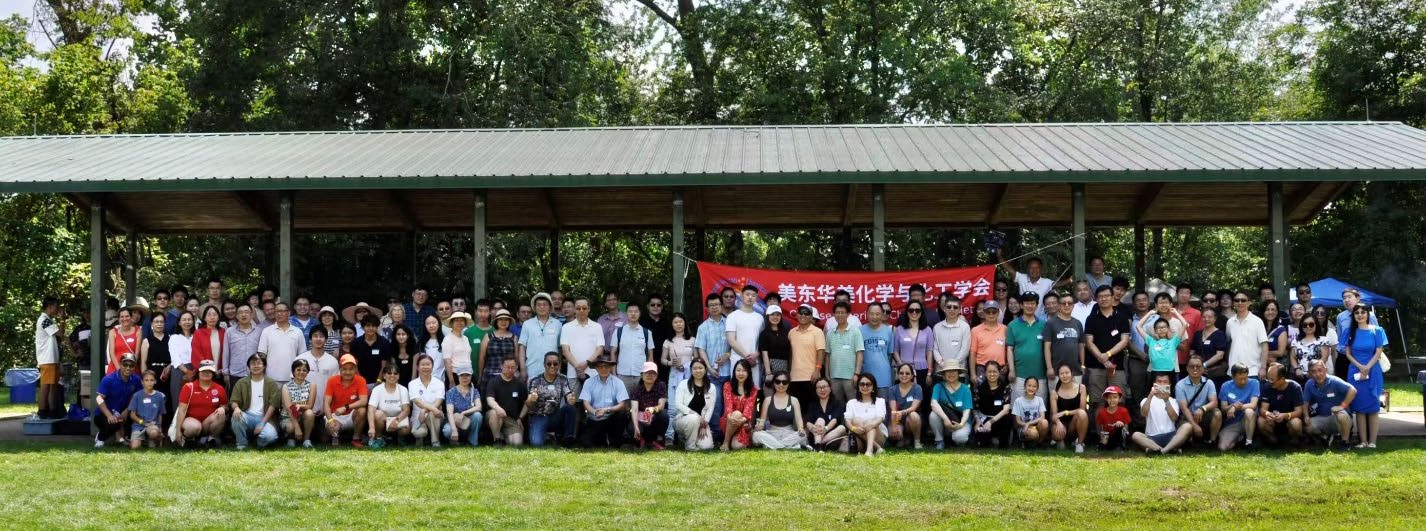
The picnic kicked off with an opening speech by current East CACS President Kevin Wang. Despite the hot summer weather, spirits remained high throughout the day as members with families, local business owners, and community leaders came together to enjoy live entertainment, networking, and delicious food. The event's success was made possible through the generous support of local business sponsors and long-term sponsors, most of whom set up interactive booths on-site to engage directly with attendees.
Highlights from the Event
- Young Scientist Fair: Student presenters captivated attendees with hands-on, fascinating chemical experiments.
- Live Music: Yingchao Zhang, a board member of FishBird Collective, entertained the crowd with a fantastic set of songs.
- Youth Talent Show: Young performers took the stage to share their talents, including vocalists Clement and Samuel from the Raysbrite Institute of Music, violinist Ryan, and young vocalist Frank, all of whom delighted the crowd.
- Vendor Booths & Networking: Guests explored a bustling showcase of local sponsors and community partner booths throughout the afternoon.
- Raffle Drawings: Excitement peaked toward the end of the day with raffle drawings featuring prizes provided by local sponsors.
With delicious food and engaging activities, the picnic provided a memorable afternoon for everyone.
Acknowledgement
- Event Planning: Jumin Hao (East CACS), Chongsong Xu (East CACS), Ou Han (FishBird Collective), Shao Fu (AAEA), Qihong Zhang (CACPA)
- MC: Mingxiao Li
- Off-site and On-site logistics: Lijuan Wang, Jonathan Ho, Dujuan Lu, Kejia Gu, Wei Cheng, Xiaozhou Feng, Yanpeng Hou, Yingchun Lv, Shan Jiang, Bo Zhang, Jin Zhu, Gigi Zhao
- Communication: Ran He, Fan Li, Mingxiao Li
- Photograph: Xing Yin
- Food Vendors: Xibei Cuisine (Sponsor), SC House, DunHuang Lanzhou Beef Noodle, Grfreshmarket
Member Highlight
Member Reflections: Three Lessons Learned from Robert Powers — A Scientific Career Shaped by Curiosity and Purpose
Bo Zhang, Ph.D., Senior Scientist at International Flavors & Fragrances (IFF), E-CACS Executive Committee Member
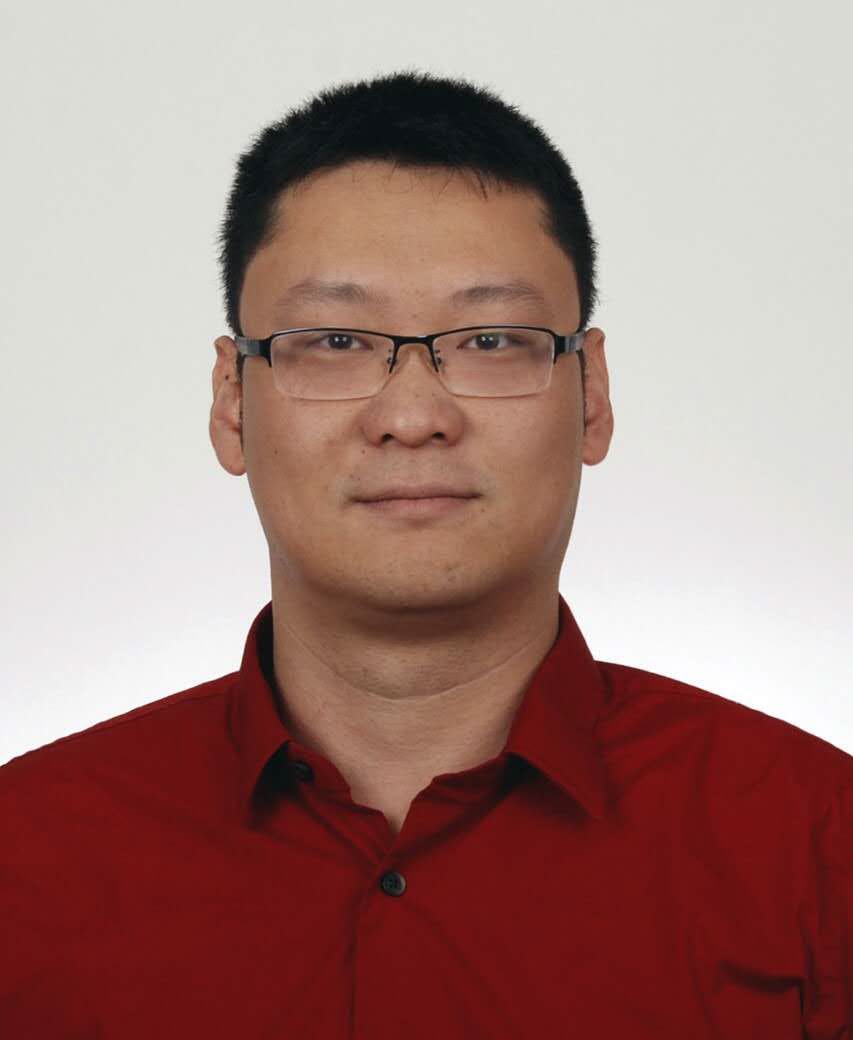
Over a career spanning more than four decades, Dr. Robert Powers ("Bob") made foundational contributions across Nuclear Magnetic Resonance (NMR) spectroscopy, structural biology, bioinformatics, metabolomics, and drug discovery. Across his roles as an industry leader, NIH researcher, and faculty member at the University of Nebraska–Lincoln, Bob helped redefine the role of NMR — expanding it from a specialized tool for chemical structure determination into a comprehensive platform for systems-level biological investigation. His scientific legacy is defined not only by his technical achievements, but by his vision for integrating experimental chemistry, computation, and biomedical research into cohesive, high-impact programs.
Below, Bo Zhang, a former Ph.D. student in the Powers Lab, reflects on key lessons from working with Bob that continue to guide his own scientific journey.
Lesson 1: Innovation Happens at the Interfaces Between Disciplines
One of Bob's earliest and most influential contributions was the development of computational approaches for analyzing multidimensional NMR data. During his postdoctoral work at the National Institutes of Health, he co-authored pioneering studies in multidimensional NMR spectroscopy that streamlined protein structural analysis during a period of rapid expansion in structural biology.
The inherent complexity of high-dimensional NMR datasets demanded computational solutions, and Bob quickly recognized that future breakthroughs in biological research would rely on bridging chemistry, computation, and biology. This interdisciplinary vision became central once he established his laboratory at the University of Nebraska–Lincoln.
There, his group developed FAST-NMR, an integrated platform combining NMR spectroscopy, ligand screening, bioinformatics, and molecular modeling to rapidly determine biochemical functions for proteins emerging from structural genomics initiatives. Later, he co-developed MVAPACK, an open-source platform that unified metabolomics data processing, statistical analysis, and visualization into a single workflow. Long before data science became standard in life science curricula, Bob trained his students extensively in programming, statistics, and computational modeling, equipping many lab alumni to build successful careers in modern AI and computational biology.
Looking back, the most enduring lesson I learned from Bob is that scientific breakthroughs thrive at the boundaries between disciplines. He never treated chemistry, biology, computation, and medicine as isolated silos, but rather as complementary tools for solving fundamental scientific challenges.
This philosophy is even more vital today. As artificial intelligence, automation, and large-scale data reshape research, the most significant advances will emerge from integrating diverse data streams into a cohesive biological picture. Rather than fearing emerging technologies, scientists must embrace them: computation and automation do not replace scientific reasoning — they amplify it. Combining deep domain expertise with computational tools creates entirely new frontiers for discovery. And as new technologies continue to emerge, fear will never be a productive response. Read more
What's New in Chemistry
Academic News
Contributor: Xiaozhou Feng
PD-1×VEGF Bispecific Ivonescimab Shows Strong First-Line Activity in TNBC
PD-1×VEGF bispecifics are emerging as a promising immuno-oncology strategy beyond lung cancer. A recent Phase 2 study in Nature Medicine evaluated ivonescimab (PD-1×VEGF) plus chemotherapy as first-line treatment for locally advanced or metastatic triple-negative breast cancer (TNBC).
Among 35 efficacy-evaluable patients, the objective response rate was 80.0%, including a 5.7% complete response rate and 74.3% partial response rate. At a median follow-up of 22.1 months, grade ≥3 treatment-related adverse events occurred in 58.3% of patients, with no treatment-related deaths.
The scientific interest extends beyond response rates. By simultaneously targeting PD-1 and VEGF, ivonescimab may integrate immune checkpoint blockade with normalization of the immunosuppressive tumor microenvironment. Its tetravalent architecture may further enhance cooperative binding and spatial coordination.
Although larger randomized studies are needed, these findings highlight the potential of molecular architecture, avidity, and spatial biology to create bispecific therapies with properties beyond conventional antibody combinations. Read more
Ligand-Free Nanoparticles: A New Approach to In Vivo CAR-T Engineering
What if the delivery vehicle could do more than deliver mRNA—it could help program the T cell?
A new study in Nature Materials reports a ligand-free polymer–lipid nanoparticle designed for in vivo CAR-T cell generation. Unlike antibody-conjugated nanoparticles, this platform exhibits intrinsic T-cell tropism and T-cell-activating activity, eliminating the need for additional targeting ligands.
Systemic administration of FAP-CAR mRNA generated CAR-T cells directly in vivo and demonstrated therapeutic activity in both tumor and fibrosis models.
The broader significance is the integration of delivery and cell programming within a single platform. Rather than treating the nanoparticle as a passive mRNA carrier, this strategy uses the carrier itself to influence T-cell biology.
For the cell and gene therapy field, ligand-free T-cell-selective delivery could potentially simplify manufacturing and CMC processes while avoiding complex antibody conjugation. Combined with transient mRNA expression, this approach may also provide greater control over CAR-T persistence and safety. Read more
Cosmetics & Personal Care
Contributor: Guangru Mao
AI Is Becoming a Beauty Adviser—but Can Consumers Trust It?
A recent survey found that 32% of U.S. women already use AI for skincare or body-care advice, while 74% believe AI could make their routines easier or more effective. Consumers are increasingly turning to AI for product recommendations, personalized routines, ingredient education, and even assessment of skin concerns from photographs.
At the same time, a recent benchmarking study found that general-purpose large language models performed poorly on technically demanding cosmetic chemistry questions. Together, these findings highlight a growing gap between consumer adoption and technical reliability. As AI increasingly influences beauty decisions, scientifically validated information, appropriate guardrails, and transparency about uncertainty will be essential. An answer that sounds confident is not necessarily an answer consumers should trust. Read more
Keeping Human Skin Alive for Four Weeks Could Change Claims Testing
Outer Bio recently introduced Yuna, an ex vivo testing platform reported to maintain full-thickness human skin—including the epidermis, dermis, multiple cell types, and immune function—for more than four weeks. The platform can generate over 30,000 data points from each sample and may eventually integrate machine learning into bioactive discovery.
Many conventional cell cultures and reconstructed skin models are useful for early screening but cannot fully reproduce the complexity or longer-term biological responses of intact human skin. A platform like Yuna could help bridge the gap between preliminary laboratory findings and clinical studies, particularly for evaluating mechanisms and longer-term efficacy. Its broader value, however, will depend on independent validation, reproducibility, and the ability to account for variability among human donors. Read more
Can Sunscreen Protect and Repair Skin at the Same Time?
Two recent Coty patent applications describe sunscreen systems designed not only to protect skin from solar radiation but also to support DNA repair or reduce thermal damage. The proposed formulations combine conventional UV filters with ingredients such as antioxidants, amino acids, botanical extracts, postbiotics, or melatonin.
The concept reflects the continued expansion of sun-care claims beyond UV protection toward addressing residual damage from broader environmental exposure. However, the article also highlights an important scientific challenge: UV filters must remain near the skin surface, while ingredients intended to support cellular repair must reach biologically relevant targets deeper in the epidermis. Demonstrating activity in vitro therefore does not necessarily establish an in vivo benefit. Meaningful claims will require evidence connecting the proposed mechanism, ingredient delivery, and measurable clinical outcomes. Read more
Process & R&D Innovation
Contributor: Yanpeng Hou
McCormick and Unilever Unveil Operating Model for Future Global Flavor Leader
McCormick & Company has outlined a new operating model and leadership structure ahead of its planned combination with Unilever's Foods business, expected to close by mid-2027. The merged company aims to become a global flavor leader by placing consumers and customers at the center of its strategy while driving innovation, operational efficiency, and long-term growth. The business will be organized into four commercial divisions: Americas Consumer, International Consumer, Global Food Service, and Global Flavor, each designed to strengthen market reach and leverage complementary capabilities from both companies. McCormick also plans to pursue a secondary listing on the London Stock Exchange, alongside its New York listing, reinforcing its global footprint. Leadership emphasized the strong cultural alignment between the organizations and highlighted integration efforts focused on realizing synergies, accelerating innovation, and creating value for customers, employees, and shareholders worldwide. Read more
FDA Calls for Stronger Infant Formula Supply Chain Safety After Contamination Incidents
The US Food and Drug Administration (FDA) is urging infant formula manufacturers and their suppliers to strengthen oversight of ingredient sourcing and production practices following several serious safety incidents. Recent investigations linked infant botulism outbreaks in the US to a shared dairy ingredient supplier used by multiple formula brands, while a separate global contamination event involving arachidonic acid (ARA) oil led to nearly 150 confirmed or suspected cases of illness across 10 countries and triggered widespread recalls. In response, the FDA emphasized that manufacturers are responsible for understanding ingredient origins, assessing supplier risks, and acting quickly when safety concerns arise. The agency also encouraged companies to closely monitor recalls, outbreak investigations, and import alerts as critical warning signals. Given infants' vulnerability and reliance on formula as a key source of nutrition, the FDA is calling for greater vigilance throughout the entire supply chain to help prevent future public health incidents. Read more
Space Rose: How NASA and IFF Turned a Flower's Journey into Orbit into a New Fragrance
In 1998, a unique collaboration between NASA and International Flavors & Fragrances (IFF) explored how spaceflight affects the scent of a rose. A miniature rose called Overnight Scentsation was flown aboard Space Shuttle Discovery (STS-95), while an identical plant was grown on Earth for comparison. Scientists found that microgravity altered the balance of the rose's natural aroma compounds, creating a softer, more floral fragrance with fewer green, grassy notes. The findings highlighted how gravity influences plant chemistry and the production of essential oils. IFF later recreated the distinctive fragrance as the "Space Rose" note, which was incorporated into Shiseido's Zen 2000 perfume. Beyond its marketing appeal, the experiment demonstrated how even subtle environmental changes can significantly affect biological processes and sensory experiences. Read more
Pharma & Biotech
Contributors: Dujuan Lu & Scarlett Liu
Recent Acquisitions in the Pharma CRO Industry
One of the most significant recent transactions in the pharmaceutical testing and analytical services sector was Eurofins' agreement to acquire Element Materials Technology's Life Sciences Testing Services business in North America for an enterprise value of $400 million. The announcement was made on July 20, 2026, with the transaction expected to close in Q4 2026, pending regulatory approvals. The acquisition includes 27 laboratories and approximately 750 employees across North America.
As a major competitor of Eurofins, SGS has also made several strategic acquisitions in 2026, including two bioanalytical laboratories, Keystone Bioanalytical and CMIC Inc. These acquisitions have expanded SGS's presence in the bioanalytical testing market and strengthened its pharmaceutical testing capabilities.
In addition, SGS completed the acquisition of Applied Technical Services (ATS) in January 2026 for an enterprise value of approximately $1.325 billion. The acquisition includes 85 facilities and approximately 2,100 employees across the United States, adding significant testing, inspection, calibration, and engineering capabilities serving industries such as medical devices, manufacturing, aerospace and defense, power generation, and industrial products.
Recent M&A activity demonstrates continued consolidation within the CRO and analytical testing industry, with Eurofins expanding its life sciences testing footprint through the Element acquisition, while SGS is strengthening its pharmaceutical and medical device testing platform through bioanalytical laboratory acquisitions and the transformative ATS transaction.
Is Biotech Entering China's Industrial Playbook?
In a recent LinkedIn article, Why Biotech Is Falling Into China's Industrial Playbook, Flavio M. argues that China's rise in biotechnology is not simply about stronger science or lower costs. It reflects a broader industrial model built around policy coordination, regulatory reform, returning talent, faster clinical execution, manufacturing capability, and scale.
His central argument is that global biotech competition may increasingly shift from "who discovers the best molecule" to "who can repeatedly turn innovation into products faster, cheaper, and at greater scale."
The comparison with solar, EVs, and semiconductors is provocative, but the underlying question is important. China's advantage may come not from any single asset, but from a system that enables more experiments, faster learning, and lower development costs. The rapid growth of China-originated licensing deals and NewCo formations also shows that Chinese biotech is becoming an upstream source of globally competitive innovation, rather than simply a manufacturing base.
The article may overstate the analogy between biotech and traditional manufacturing. Drug development still depends heavily on scientific insight, clinical strategy, regulation, and commercialization. But one point is increasingly difficult to ignore: execution infrastructure is becoming as important as scientific originality.
As biology becomes more automated, data-driven, and platform-based, biotech itself is becoming more like an engineering discipline.
This is also why ATLATL's approach is particularly relevant. The future of Chinese biotech may increasingly follow an AI + Automation + Engineering model — creating faster experimental cycles, more standardized R&D, and a more scalable innovation system.
The real competition, therefore, may be about who can build the fastest learning loop from science → experiment → clinical evidence → manufacturing → product. Read more
Personalized Cancer Vaccines Reach a Phase 3 Milestone
Moderna and Merck announced that their personalized mRNA cancer therapy, intismeran autogene (V940), combined with Keytruda, met both its primary endpoint of recurrence-free survival and a key secondary endpoint of distant metastasis-free survival in the Phase 3 INTerpath-001 trial for patients with resected high-risk melanoma. The study enrolled 1,137 patients, making this the first positive Phase 3 trial for an individualized neoantigen therapy and an mRNA-based cancer treatment.
Unlike a traditional vaccine, intismeran is manufactured specifically for each patient. Tumor sequencing is used to identify unique mutations, and an mRNA construct encoding up to 34 selected neoantigens is then produced to train the patient's immune system to recognize tumor cells. Keytruda simultaneously removes the PD-1 immune checkpoint, creating a combination of personalized immune targeting + immune activation.
The significance goes beyond melanoma. Personalized cancer vaccines have been discussed for decades, but manufacturing complexity, turnaround time and inconsistent clinical efficacy have limited their translation. A successful large Phase 3 study suggests that personalized therapies may finally be moving from an experimental concept toward a reproducible treatment platform.
There is still an important caveat: Moderna and Merck have not yet released detailed Phase 3 efficacy numbers, and overall-survival data remain immature. The magnitude and durability of benefit will therefore matter when the full dataset is presented.
Our Take: The bigger story is not simply that "mRNA works in cancer." It is that sequencing, computational antigen selection, rapid mRNA manufacturing and immunotherapy can now be integrated into a patient-specific therapeutic workflow at Phase 3 scale.
If confirmed by the full data, this could mark an important step toward programmable, personalized cancer medicine — where treatment is increasingly designed around the molecular information of each individual tumor rather than manufactured as one identical product for every patient. Read more
A New RAS Milestone in Pancreatic Cancer
On August 26, the FDA approved Revolution Medicines' Rasonque (daraxonrasib) for adults with metastatic pancreatic adenocarcinoma who have received prior systemic therapy or are unable to receive multi-agent treatment. It is the first FDA-approved therapy designed to broadly inhibit multiple forms of RAS in pancreatic cancer.
The approval is notable because pancreatic cancer has historically been one of the most difficult solid tumors to treat. RAS mutations drive the vast majority of pancreatic adenocarcinomas, yet RAS was long considered essentially "undruggable."
In the 500-patient Phase 3 RASolute 302 trial, daraxonrasib delivered a substantial survival benefit: median overall survival reached 13.2 months versus 6.7 months with standard chemotherapy, while median progression-free survival improved from 3.6 to 7.2 months. The overall response rate was 30% versus 11%.
The broader significance is that the RAS field is moving beyond mutation-specific approaches such as KRAS G12C inhibitors. Daraxonrasib targets the active, GTP-bound state of multiple RAS variants, potentially expanding targeted therapy to cancers driven by more common mutations such as KRAS G12D and G12V.
Our Take: This approval represents more than a new treatment for pancreatic cancer. It is another step in turning RAS — once considered one of oncology's most inaccessible targets — into a broader therapeutic platform.
The next question is whether pan-RAS inhibition can move earlier in treatment, combine effectively with other therapies, and extend beyond pancreatic cancer into other RAS-driven tumors. Read more
Sponsor Highlight — ChemExpress
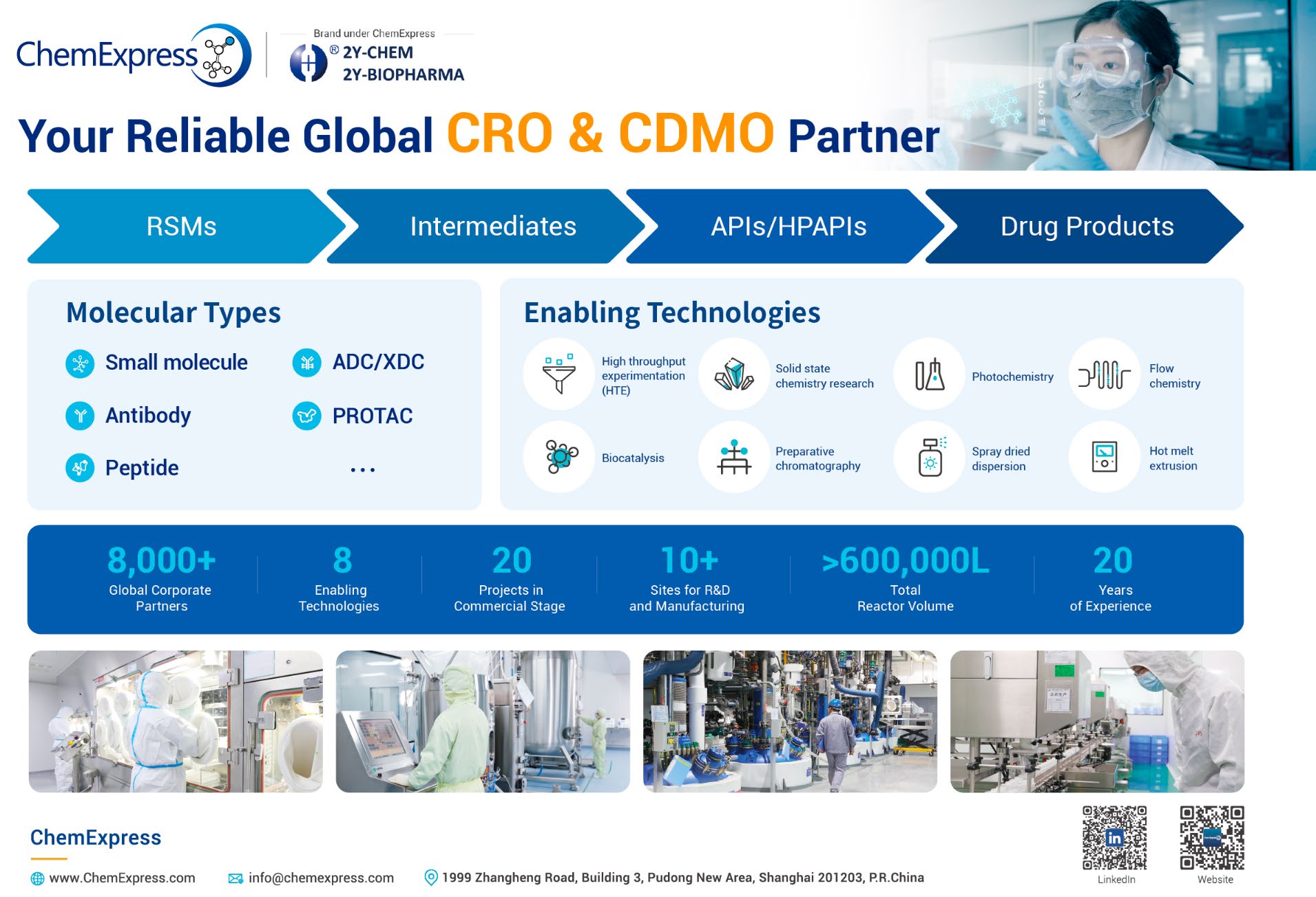
E-CACS greatly appreciates ChemExpress's generous silver sponsorship!
Website: www.chemexpress.com · LinkedIn: Haoyuan ChemExpress Co., Ltd.