March 2026 Edition
E-CACS March 2026 Newsletter
45th Anniversary Lunar New Year gala recap, a member highlight on Dr. Yuan Cheng, academic news on next-generation CAR-T, and an industry roundup spanning materials, biotech, cosmetics, and food science.
Editor's Note
Chief Editor: Xiaozhou Feng
This issue reflects both momentum and transformation across our community and the broader scientific landscape. From Dr. Yuan Cheng's leadership in pharmaceutical development and his continued dedication to E-CACS, to groundbreaking advances in CAR-T technologies and emerging innovations across materials science, biotech, and consumer products, a common theme emerges: innovation is no longer confined to discovery alone — it is increasingly defined by translation, scalability, and real-world impact.
At the same time, shifting industry dynamics — from evolving funding environments to global manufacturing strategies — remind us that science operates within a larger ecosystem shaped by policy, investment, and collaboration. Our recent 45th Anniversary and Lunar New Year celebration beautifully captured this balance, honoring our heritage while energizing the path forward.
As always, we hope this newsletter not only informs but also connects — bridging disciplines, industries, and generations within our vibrant community.
45th Anniversary & Chinese New Year Celebration
Contributor: Chongsong Xu
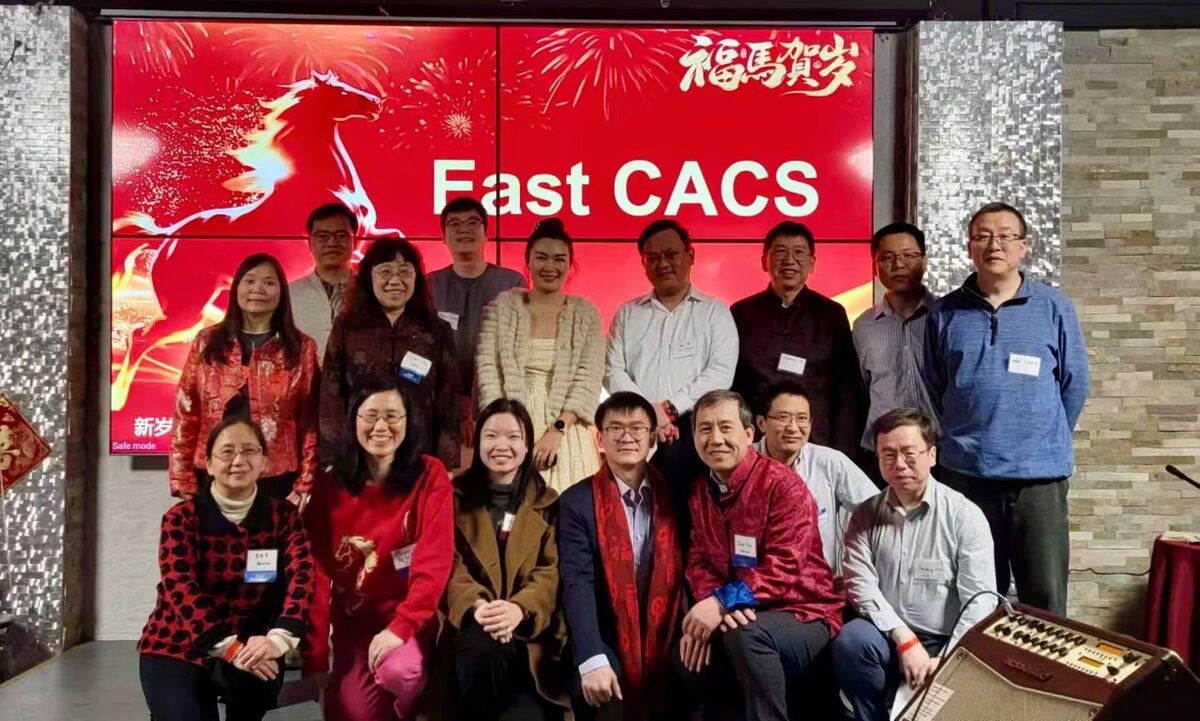
South Plainfield, NJ — On February 28, 2026, the Chinese American Chemical Society, East Chapter (E-CACS) hosted a spectacular Lunar New Year Gala. The event was a double celebration, marking both the Year of the Horse and the 45th Anniversary of the association's founding. The evening was a vibrant blend of professional heritage, cultural excellence, and community spirit.
Honoring the past, mapping the future
The gala commenced with an opening address by President Kevin Wang, who unveiled the current organizational structure and shared a comprehensive roadmap for the 2026 event calendar. Highlighting the association's commitment to excellence, President Wang presented the Excellent Service Awards to five distinguished members for their outstanding contributions.
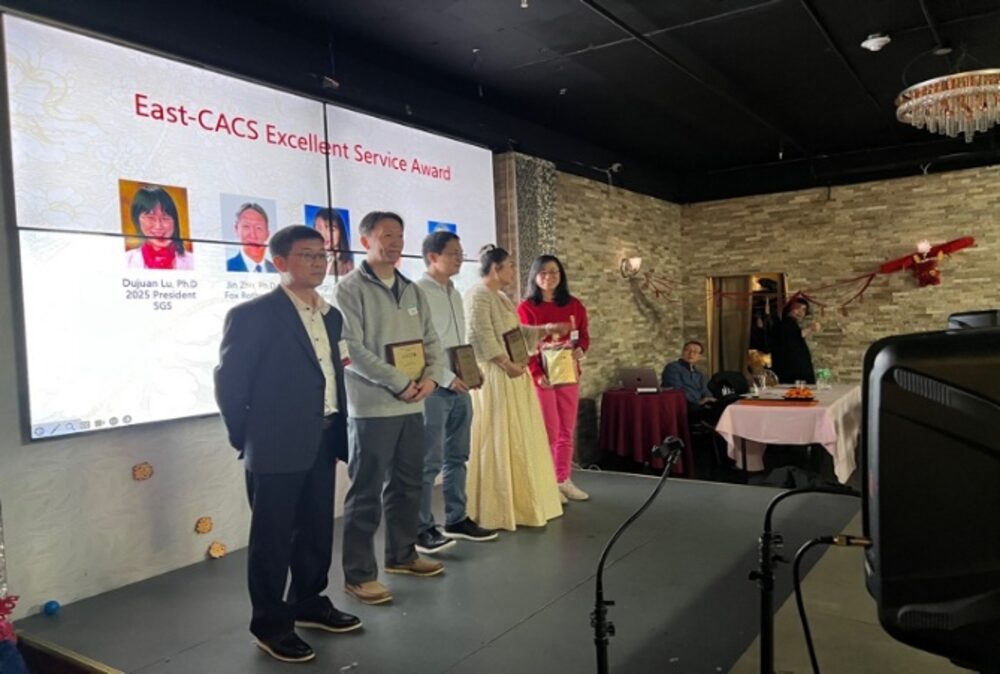
Following the roadmap, former President Dujuan Lu provided a heartfelt retrospective of the association's 2025 achievements. The spirit of the wider scientific community was felt through video greetings from Marinda Wu (Former ACS President) and Qiang Yuan (CACS Board Chair). On-site, Wei Gao (Philadelphia ACS Chair & CACS 2026 President) offered warm remarks, joined by a gathering of former E-CACS Presidents for a historic group photo.
A feast of art and culture
The evening's performances, hosted by a dynamic team including Jian Wang, GiGi Zhao, Chongsong Xu, and youth hosts Amy Cheng and Grace Zhu, showcased world-class artistry:
- Traditional melodies: Pipa soloist Jin Yang and the Silk and her band opened with "Jasmine Flower" and "Racing Horses," taking the audience on a musical journey from delicate blossoms to the thundering Steppe.
- Dynamic dance: Yong Ma, a celebrated dance educator, performed the Hebei folk dance "Pie Shan" (Fanning), followed later by a high-energy performance of "Apt."
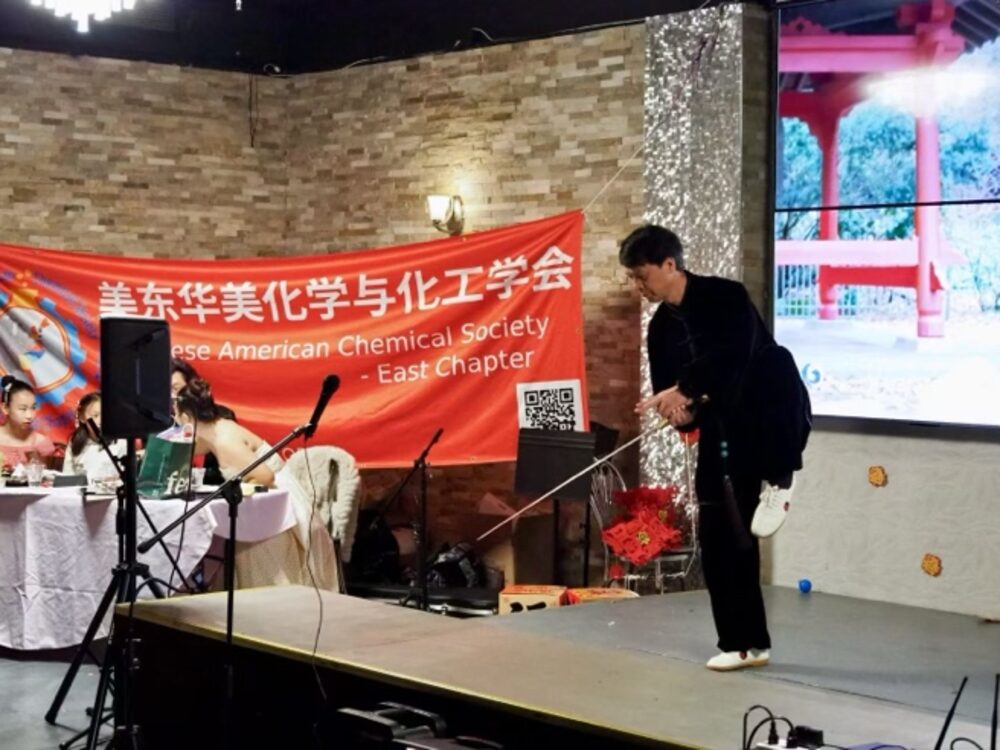
- Martial arts: Tai Chi champion Yongchu Song demonstrated the depth of Chinese martial arts through "Chen-style Tai Chi Sword" and "Tai Chi Quan Er Lu."
- The next generation — Rising Stars: Jennie Zhang (National Champion) performed the peacock dance "Spirit of the Bird"; Helen & Jessica Hao performed "The Olive Tree"; Sophia Cheng presented the modern ballet "Gemini"; Jinyi Feng performed "Let Us Sway the Oars"; and Daniel Zhu delivered a clarinet solo, "Allegretto Fantasia."



Community engagement & heritage
The celebration was peppered with interactive traditions. Liwei Fang, Director of the American Calligraphers Association, inscribed a special Spring Festival couplet for the 45th Anniversary. Jumin Hao engaged the audience with a traditional idiom riddle challenge, while GiGi Zhao led energetic games for the children.
The evening also honored the future of science as former Presidents Dujuan Lu and Yingchun Lu presented the Young Scientist Awards to the year's rising researchers.
Gratitude to our sponsors
The success of the gala was bolstered by the generous support of our sponsors, whose representatives joined the lucky-draw sessions:
- Diamond: Jk.com, Fox Rothschild, Waters
- Gold: Precise PEG, ALFA Chemistry, IFF, Johnson & Johnson, THC Lawyers
- Silver: ChemExpress, Primera
- Bronze: Apex 974
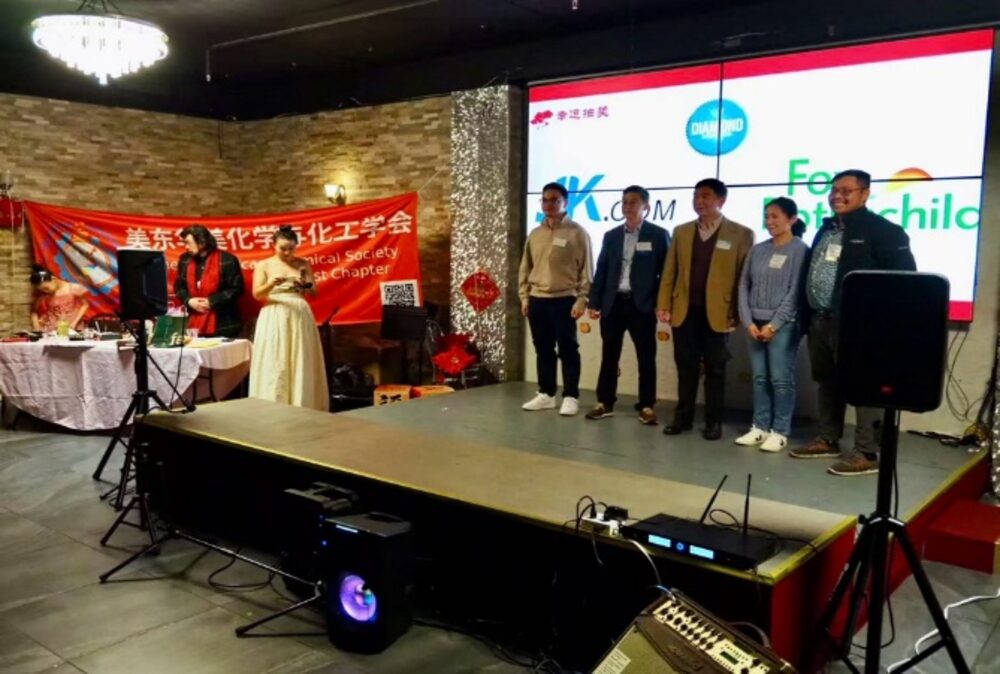
The night concluded on a high note with a group chorus of "In the Spring" by EC members and Jian Wang. As the Year of the Horse begins, E-CACS gallops into 2026 with renewed vigor, celebrating 45 years of bridging chemistry and community.
Member Highlight — Yuan Cheng, PhD
Associate Director, Regeneron

Dr. Yuan Cheng is the 2024 Chair of E-CACS and has served as a board member since 2015. He earned his Ph.D. in Biochemistry and Biophysics from the University of North Carolina at Chapel Hill in 2011 and completed his postdoctoral training in the lab of Nobel Laureates Dr. Mike Brown and Dr. Joe Goldstein at the University of Texas Southwestern Medical Center.
With over a decade of experience in the pharmaceutical industry, Dr. Cheng has held key positions at companies including Bristol Myers Squibb and Regeneron. As Associate Director he leads a team focused on formulation and process development for antibody and gene therapy.
Dr. Cheng has authored more than 25 peer-reviewed publications and is an active member of the American Association of Pharmaceutical Scientists (AAPS) and the American Society of Gene and Cell Therapy (ASGCT). In 2023 he served as President of the AAPS Protein Purification, Storage, Transportation and Drug-Device Combination Community.
Dr. Cheng plays an active role in E-CACS, currently serving as Treasurer and as a member of the Executive Committee. He contributes to the Budget & Finance Team, helping to strengthen operations and outreach with Dr. Ho and Dr. Mao.
Across his professional and volunteer work, Dr. Yuan Cheng is recognized for his leadership in pharmaceutical development, dedication to scientific excellence, and active contributions to professional societies and the Chinese American scientific community.
Academic News
Contributor: Xiaozhou Feng
Reprogramming CAR-T manufacturing for stem-like, long-lived T cells
Dr. Harris Goldstein's lab reports an approach to manufacturing CAR-T cells that may overcome a major limitation in current therapies: poor long-term persistence. Traditional CAR-T production relies on anti-CD3/CD28 activation, which often pushes T cells toward terminal differentiation, limiting durability and effectiveness.
The team developed a novel protein scaffold, HCW9206, that delivers combined signals from IL-7, IL-15/IL-15Rα, and IL-21 without strong TCR activation. This strategy promotes the generation of stem-like, long-lived T cells with enhanced functionality. HCW9206-generated CAR-T cells contained over 50% T-memory stem cells — roughly 14× higher than conventional methods. In leukemia mouse models the cells demonstrated superior persistence and completely eliminated tumors upon rechallenge. In humanized HIV models, the engineered CAR-T cells achieved about 92% suppression of infected cells, nearly doubling the efficacy of standard approaches. The cells maintained strong cytotoxicity, produced higher levels of TNF-α and IFN-γ, and showed reduced exhaustion markers. The method was effective using T cells from people living with HIV, highlighting its translational potential. Overall, this simplified manufacturing strategy could enable more durable cancer immunotherapies and advance efforts toward functional cures for HIV.
Light-controllable CAR-T via PROTACs
Dr. Mark A. Sellmyer's lab introduces a strategy to control CAR-T cell activity by merging two rarely combined technologies: PROTACs and engineered cell therapies. The team designed CAR-T cells incorporating a degradable tag (eDHFR) on the CAR receptor and paired this with light-responsive PROTAC molecules. Upon light exposure, these PROTACs selectively degrade the CAR receptor, dialing down CAR signaling. This reduces tumor-killing activity and inflammatory cytokine release without eliminating the T cells themselves.
The approach offers several advantages. It provides a potential method to mitigate serious CAR-T-associated toxicities such as cytokine release syndrome (CRS) and neurotoxicity; it enables precise spatiotemporal control, allowing clinicians to regulate CAR-T activity in specific tissues and at specific times; and it introduces photopharmacology as a new regulatory layer in cell therapy. Photocaged PROTACs enabled rapid, robust suppression of CAR activity, while reversible photoswitchable systems suggest future possibilities for dynamic on/off control. Challenges remain — particularly light penetration in vivo and efficient delivery — but the concept represents a meaningful step toward externally controllable, tunable cell therapies with improved safety and precision.
Industry News
Advanced materials & electronics
Contributor: Jin Zhu
Beam-steering metasurfaces that tune 5G indoors
Engineers have fabricated next-generation reconfigurable intelligent surfaces (RIS) using densely packed metal–dielectric meta-atoms with tunable components — varactors or phase-change films — that alter electromagnetic phase shift in real time. A wall-mounted panel can dynamically redirect, focus, or scatter mmWave signals with high angular precision, overcoming line-of-sight limitations of indoor 5G. Beyond reinforcing coverage, these metasurfaces accomplish wavefront shaping at sub-wavelength resolution, enabling functions such as splitting a single beam into multiple controlled outputs or selectively suppressing interference. Integrating RIS into building materials — ceiling tiles, window coatings — reduces the need for small-cell densification by ensuring signal uniformity through intelligent reflection rather than transmission, lowering infrastructure cost while improving energy efficiency in dense environments.
Microcapsule-patched circuitry that restores conductance on impact
A new electronic laminate uses mechanically sensitive microcapsules loaded with conductive monomers and catalysts placed at high-stress copper-trace regions. When thermal cycling, flexion, or micro-vibration causes a trace to fracture, capsules burst and release their payload, which polymerizes into a conductive network bonded to the ruptured copper. Lab testing shows recovery of up to 95% of original conductance within minutes, even after repeated damage cycles. Applied to multilayer PCBs, mission-critical electronics — satellite circuits, deep-sea sensors — can maintain function despite micrometeorite strikes, pressure cycling, or radiation-induced micro-cracking. Tunable rupture thresholds let engineers design different capsule densities for flex PCBs, rigid boards, or stretchable substrates. At scale the technology could substantially reduce electronic waste by prolonging device lifetimes.
Energy & sustainability
Contributor: Jin Zhu
34%-efficient perovskite–silicon tandems for tight spaces
Hybrid tandem photovoltaics achieve record performance by stacking a wide-band-gap perovskite top absorber over a traditional silicon bottom cell, optimizing capture of high-energy photons while passing lower-energy light to silicon. Researchers have achieved >34% certified efficiency through interface passivation layers that suppress recombination, alkali-metal (Rb/Cs) doping that improves lattice stability, and graded mixed-halide compositions that maintain performance under heat and illumination stress. Manufacturers can integrate perovskite layers atop existing wafers using scalable coating methods. High power density makes them ideal for compact rooftops, RVs, marine vessels, and urban mobility (e-bikes, solar-augmented cars). With first commercial entries expected in 2026, these cells could redefine distributed solar by offering utility-scale efficiency in portable formats.
Digital health, pharma & biotech
Contributors: Scarlett Jiatong Liu, Chongsong Xu, Jin Zhu
Eli Lilly's $3 billion China manufacturing expansion
Eli Lilly has announced a significant expansion of its manufacturing footprint in China, committing roughly $3 billion over the coming decade. The investment is aimed at supporting production of next-generation oral GLP-1 therapies, including orforglipron, and strengthening Lilly's position in the diabetes and obesity market.
The move reflects a broader strategic shift among multinational pharmaceutical companies toward localized manufacturing, supply-chain resilience, and intensified competition in China. The expansion will focus on existing facilities — including Suzhou — and new localized capacity for oral GLP-1 drugs, alongside collaboration with local CDMOs. The GLP-1 market in China is projected to reach approximately $14 billion by 2030; Lilly faces growing competition from Novo Nordisk and from a large number of domestic players. Persistent global supply constraints have made manufacturing capacity itself a competitive differentiator.
Beyond capacity, the move signals a clear emphasis on localization: producing within China lets Lilly reduce costs, improve supply reliability, and align with local regulatory and reimbursement frameworks while mitigating geopolitical and logistical risks. Success in high-demand therapeutic areas such as GLP-1 increasingly depends not only on innovation but on the ability to manufacture at scale and deliver efficiently in key markets.
U.S. biotech funding rounds fall to a five-year low
The U.S. biotech sector is navigating one of its most challenging fundraising climates in recent memory. According to S&P Global Market Intelligence, the number of biotech funding rounds has dropped to its lowest level in five years — a stark signal that investor caution is reshaping how capital flows into life sciences.
Biotech's share of total U.S. startup investment has hit its lowest point in over two decades. So far in 2025, investors deployed approximately $16.6 billion into seed-through-growth-stage biotech rounds — just over 8% of all U.S. startup investment, well below the 15%+ share the sector had reliably commanded. A key culprit: the rise of generative AI, which has redirected enormous pools of capital toward tech.
Macro headwinds extend beyond AI competition. Early-stage biotechs have historically leaned on non-dilutive NIH funding — over $40 billion at its disposal. Proposed federal budget cuts would reduce that figure to $27.9 billion, tightening the pipeline for pre-revenue companies. Additional pressure comes from cuts to public research funding, leadership changes at the FDA and public-health agencies, and uncertainty around drug pricing.
The funding environment has created a "haves and have-nots" market: companies with strong clinical or commercial traction continue to attract capital while others struggle to close rounds. More than half of publicly traded biotechs ended 2024 with less than two years of cash runway, pushing many toward partnerships or royalty financing — a non-dilutive route estimated at roughly $14 billion annually.
Despite the contraction in deal count, large rounds continue for the right assets, with 2026 funding concentrating around neuropsychiatry, immunology, and respiratory disease. AI/ML is increasingly embedded across target identification, molecule design, and trial analytics, drawing sustained venture interest in both platform and asset-centric models. The slowdown in early-stage financing raises a longer-term concern: a thinner pipeline today means fewer assets ready to scale in the years ahead.
AI- and RWD-driven engines compress clinical-trial timelines
Modern clinical-trial optimization platforms integrate real-world data (RWD) from EHRs, imaging archives, pharmacy records, and wearables to pre-screen large patient pools using AI eligibility models. NLP tools extract phenotypes, comorbidities, and biomarker indicators that would traditionally require manual chart review. Platforms dynamically match trial protocols to available patient populations, cutting recruitment delays. Decentralized trial toolkits enable remote telemedicine visits, home sample collection, and continuous monitoring; blockchain-secured audit logs ensure traceability and compliance. Predictive analytics forecast dropout risk and prompt targeted retention. Together these systems reduce operational cost, shrink recruitment from months to weeks, and support more inclusive participant representation — particularly for groups historically excluded from research.
One-shot biologics and gene therapies near approval
Next-generation biologics entering the 2026 pipeline include long-duration gene therapies, engineered enzymes, and highly specific monoclonal antibodies designed for single-dose or ultra-low-frequency administration. Examples include ABBV-RGX-314, which delivers an anti-VEGF genetic payload to retinal tissue to produce therapeutic proteins continuously (replacing monthly injections in wet AMD); imlifidase, an enzyme that cleaves IgG antibodies to enable organ acceptance in highly sensitized transplant patients; and tividenofusp alfa, which delivers selective immune-engaging molecules to rare cancers. Manufacturing innovations and streamlined regulatory frameworks are accelerating these therapies toward market.
In vivo CAR-T that programs T cells inside the patient
The emerging in vivo CAR-T paradigm bypasses the multi-week ex vivo manufacturing pipeline by delivering genetic instructions directly to circulating T cells, using vectors engineered to selectively target immune cells or lipid nanoparticles carrying mRNA encoding the CAR construct. Once inside the body, these systems exploit natural T-cell biology to produce CAR receptors endogenously, effectively turning the patient into a self-contained bioreactor for therapeutic cell production. Early trials — such as anti-BCMA constructs tested for multiple myeloma — show that within days of a single infusion, reprogrammed T cells expand and begin attacking malignant cells. By eliminating leukapheresis, viral vector transduction, bioreactor expansion, and cryogenic logistics, in vivo CAR-T could dramatically expand access to cell therapy and enable treatment at community hospitals rather than specialized centers.
Cosmetics & personal care
Contributors: Mingxiao Li, Guangru Mao
Henkel invests in North America R&D hub
Henkel announced a $70 million investment to build a new Consumer Brands Center of Research & Development in Trumbull. The 110,000-square-foot campus will unify three existing Connecticut R&D sites into one collaborative hub supporting more than 200 employees, 27 laboratories, and three pilot plants. Scheduled to open in 2027, the facility will focus on innovation across hair care, laundry, home care, and related functions, and is designed with sustainability in mind — strengthening Connecticut's role as a center for advanced product development.
The verbal gymnastics of cosmetic claims
A veteran of the industry tackles the "verbal gymnastics" required to market high-performance chemistry within strict cosmetic bounds. The piece is a humorous yet practical look at how R&D breakthroughs must be carefully translated into benefit-driven language to avoid the dreaded drug classification. For those of us used to precise molecular data, it's a witty reminder that in personal care a single misplaced word can be just as disruptive as a failed stability test.
The commercial face of sunscreen innovation
This industry roundup offers a high-level look at how brands are currently pitching and innovating sun protection, highlighting the latest market directions in daily protection and skincare-SPF hybrids. For the technical side of the house, these consumer-facing claims offer a window into current market gaps that can spark sun-care innovation.
Accelerating ingredient discovery via in silico modeling
The integration of computational chemistry and AI-driven virtual screening is reshaping the personal-care R&D pipeline. In silico innovation lets researchers predict molecular performance and toxicological profiles at an atomic level before physical synthesis. Shifting from trial-and-error to high-precision digital workflows is compressing development timelines and optimizing ingredient efficacy — a compelling look at how "materials intelligence" is redefining the future of chemical formulation.
Sensory & consumer experience tech
Contributor: Jin Zhu
Millisecond olfactory actuators for phones and VR
Ultra-responsive olfactory actuators now use micro-electrothermal or piezo-acoustic valves capable of ejecting scent molecules in metered bursts of only a few milliseconds — orders of magnitude faster than traditional atomizers. Multi-channel reservoirs hold unique volatile compounds that can be blended algorithmically to construct complex accords on demand. Precise alignment with digital media becomes possible: a VR simulation can trigger a warm woody note exactly as a virtual campfire ignites, or shift to a cool marine accord on scene transition. Despite their performance, these actuators run on milliwatt power budgets, fitting smartphones, AR glasses, smart jewelry, and gaming headsets. Replacing pumps with solid-state diffusion layers enables sub-second-precision "scent-augmented computing" — notifications, navigation, or emotional cues delivered olfactorily.
Gesture-activated, room-scale aroma displays
Researchers have developed addressable, multi-nozzle diffusion grids that form an invisible olfactory display spanning an entire room. Overhead or wall-mounted modules contain tens to hundreds of independently triggered scent channels, each issuing micro-plumes in directional patterns. Activation is governed by gesture-recognition systems — optical tracking or short-range radar — that interpret swipes, points, or circular motions as control signals to select, intensify, or transition scents. A retail visitor could wave toward a shelf and instantly experience the associated fragrance as a localized plume; a therapy patient could adjust calming scents by hand motion without touching any interface. Multi-zone scent fields enable spatial narrative — warm spices on one side of a gallery, brisk mineral notes on the other — while airflow modeling keeps zones partitioned and fresh.
Food science & agriculture
Contributor: Yanpeng Hou
EU intensifies action on PFAS as health and economic risks grow
A European Commission study warns that PFAS ("forever chemicals") could cost the EU up to €440 billion (≈ $520 billion) by 2050 if contamination is not addressed. PFAS are widely used for their water- and oil-repellent properties, particularly in food packaging, but are highly persistent and linked to long-term health concerns.
EFSA data show that fish consumption can increase blood PFAS levels by 20–40%, with fish, fruits, and eggs among the highest contributors to dietary exposure. PFAS have also been detected in beer in the U.S., fruits and vegetables in the EU, and food packaging in Canada — underscoring the global scope of the issue. While monitoring efforts continue, data gaps remain.
In response, the EU plans to ban PFAS in certain food packaging starting August 2023, accelerating industry efforts to transition away from these chemicals. Although replacement presents technical challenges, food companies are increasingly investing in bio-based and PFAS-free barrier technologies, driven by both regulatory pressure and growing consumer demand.
Why precision fermentation is shaping the future of food innovation
Precision fermentation is emerging as a key technology for the future of food innovation, offering a scalable way to meet rising demand for protein and specialty ingredients. The process uses microorganisms — yeast or bacteria — as "mini factories," converting simple inputs like sugars into targeted outputs such as proteins, sweeteners, natural colorants, and specialty oils. Often confused with cultivated meat, precision fermentation focuses on producing specific molecules rather than growing animal cells.
Compared with traditional agricultural or extraction methods, precision fermentation can reduce water and energy use by more than 90% while improving yield, consistency, and supply stability. It also allows greater control over ingredient composition, enabling tailored functionality and potential reductions in allergens. Companies like Cargill, which has invested heavily in fermentation infrastructure for decades, see it as a proven yet rapidly evolving platform. Looking ahead, precision fermentation is expected to complement existing food technologies rather than replace them, positioning it as a flexible tool across nutrition bars, soups, and beyond.
Sponsor spotlight — Fox Rothschild

E-CACS greatly appreciates Fox Rothschild's generous Diamond sponsorship.
Fox Rothschild is a national law firm delivering strategic and practical solutions for clients. Home to 1,000 attorneys in 30 offices coast to coast, Fox offers a team of accomplished professionals who have honed their legal skills across government and industry. The firm serves a wide range of clients — from Fortune 500 corporations to startups, family-owned businesses, educational institutions, nonprofit organizations, and individuals.